
 Livestock
Inside the piggery
Breeding, farrowing, weaners and finishers — how the herd is actually run day to day, plus the poultry alongside it.
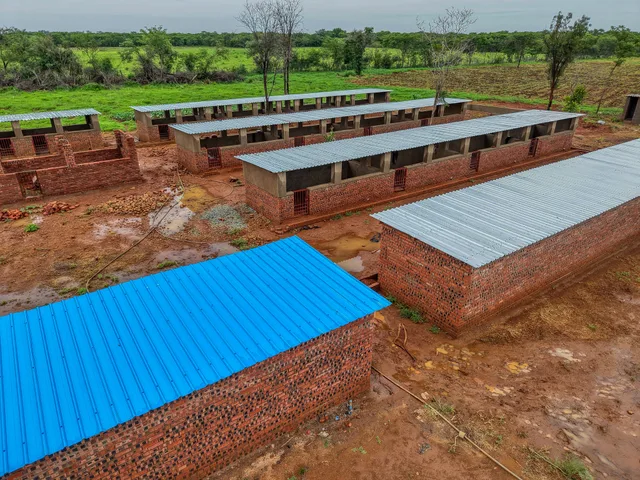
Our own photographs of the build, in the order it happened — clearing and setting out, foundations, brickwork by hand, steel and roofing, and the day the herd walked into housing that was designed for it.
The piggery is the operation the rest of Ecomatt Farm is organised around. For months it was also a building site, and we photographed every stage of it.
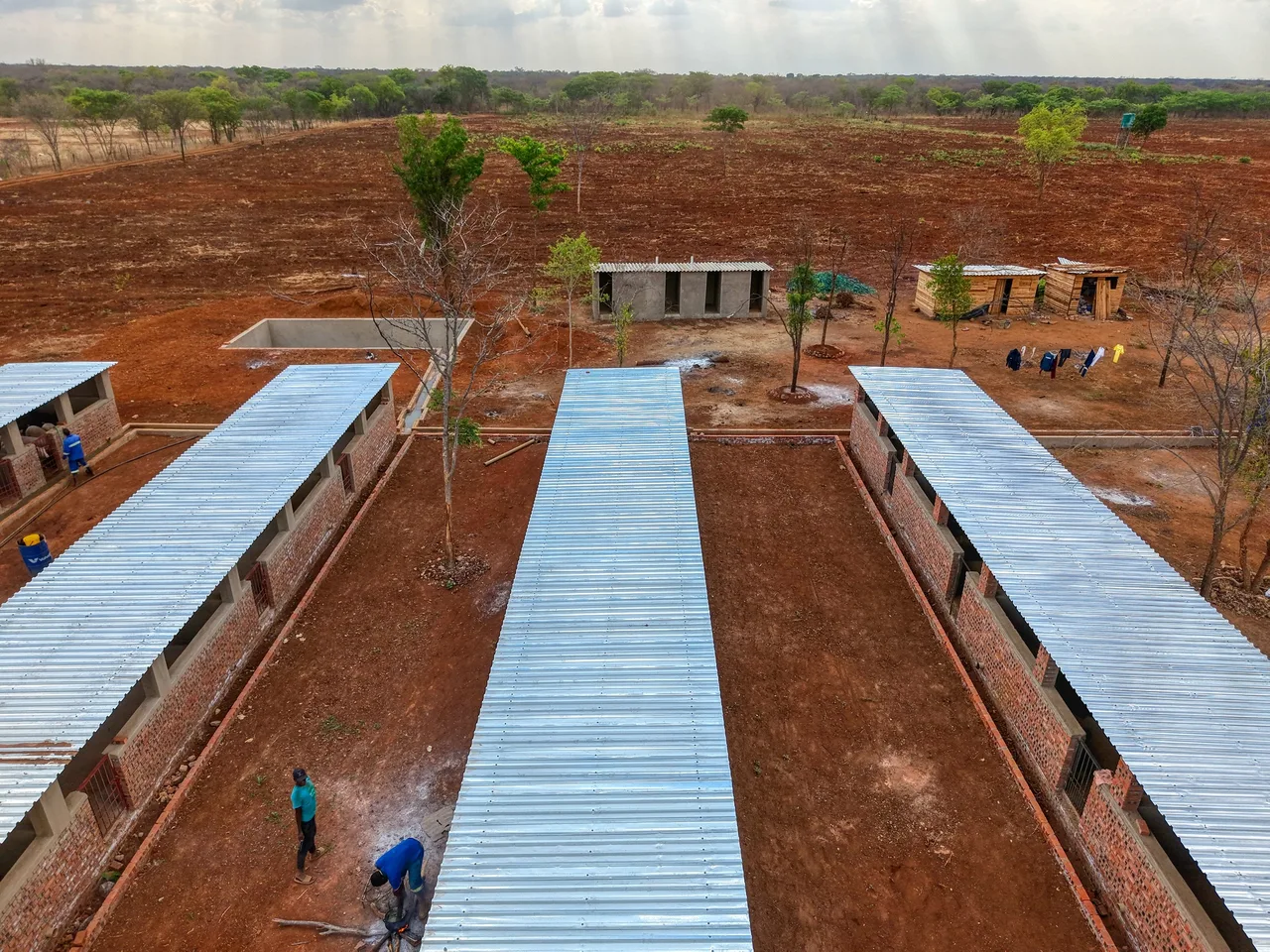
We did not buy a finished farm. The pig housing at Plot 12 Sherwood started as open ground, and everything you can see on it now — foundations, walls, columns, trusses, roof sheets, floors and pens — was set there by our own crews, course by course and sheet by sheet. This is how it happened, told with the pictures we posted as the work went up.
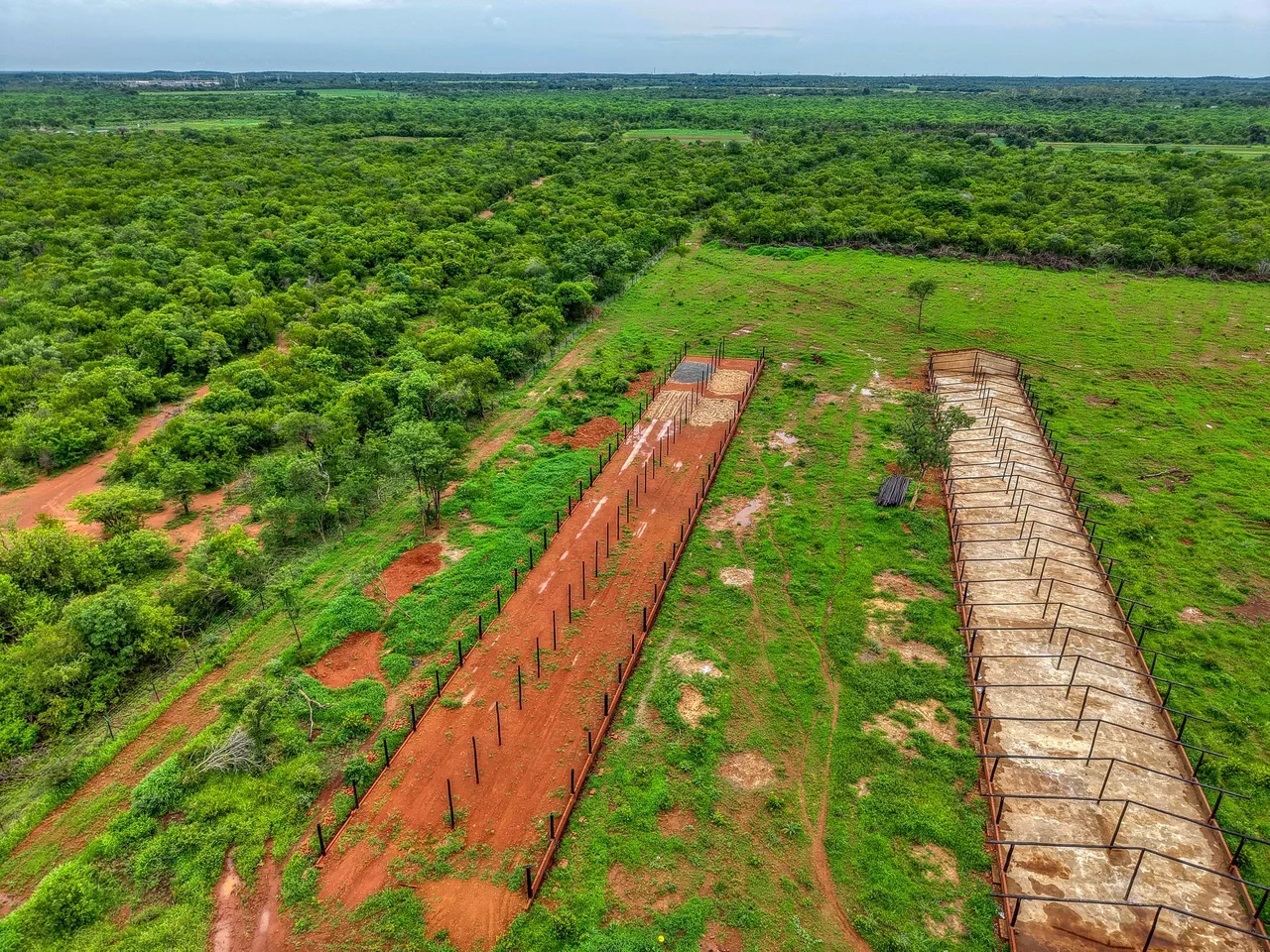
The first job was the least photogenic and the most important. The ground was cleared, then walked and pegged out so that everything had room before a single trench was cut: the pen lines, the space between the blocks, the routes a wheelbarrow and later a bakkie would need, and the falls that decide where water goes when the rains come.
Setting out on a pig unit is not just about fitting buildings onto a plot. Pens have to be long enough for stock to move away from their feed and their water, wide enough to clean properly, and spaced so that air can pass between the blocks instead of sitting still between them. Getting that wrong in chalk lines is cheap. Getting it wrong in brick is not.
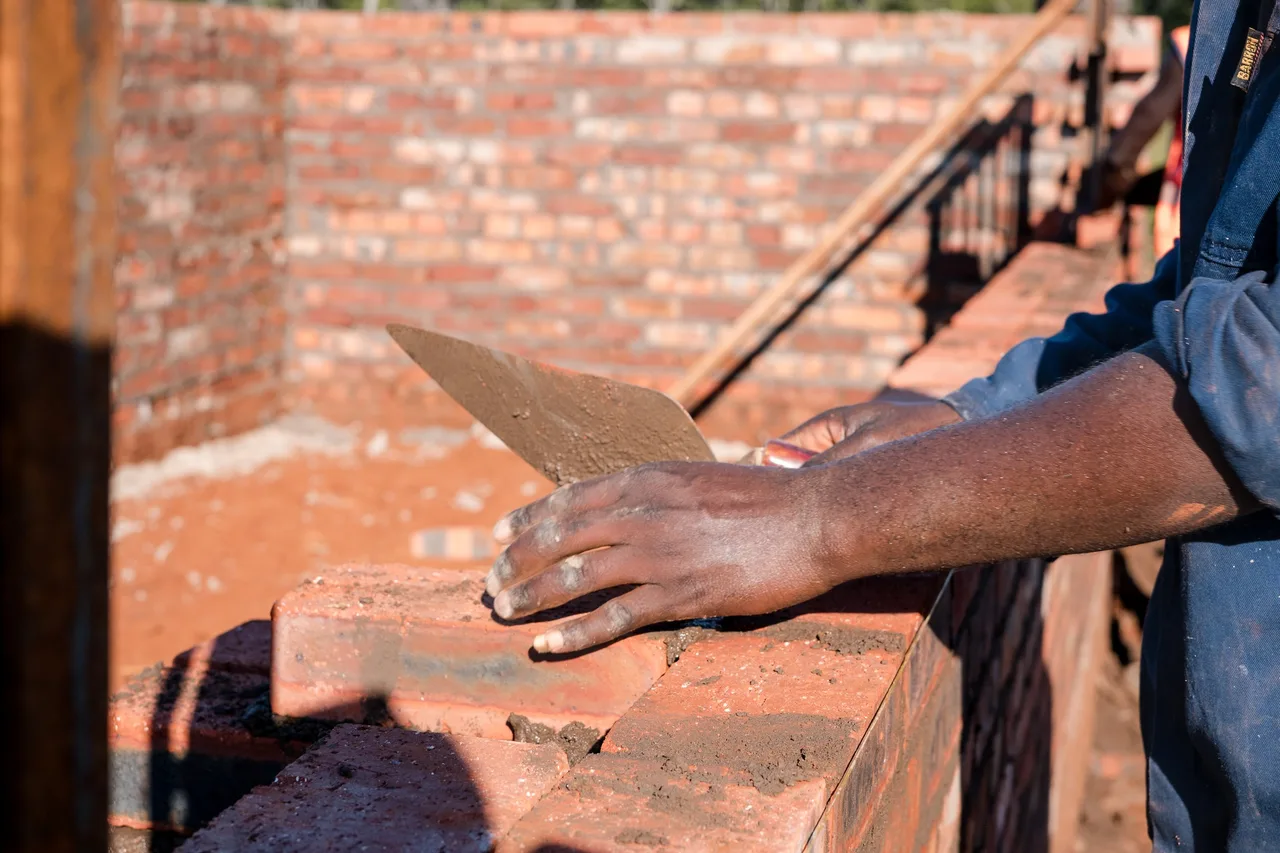
With the trenches cut and filled, the bricklayers moved in. Mortar was mixed on site and barrowed straight to the wall so nobody stood waiting, and the first courses were bedded, levelled and checked by hand. This is the slow part of any farm build. It is also the part that decides whether a pen wall is still straight and still watertight in ten years, so nothing was hurried through it.
Farm buildings take punishment that houses never see. Pigs lean on walls, scratch on corners and push against gates, and every pen gets hosed down over and over. So the brickwork was built for washing and for wear: solid walls, tidy joints, and floors laid to drain rather than to hold water.
Once the courses were above knee height the shape of the piggery finally became obvious from the ground. Brick columns came up along the pen lines to the height the roof needed, and their spacing set out the whole structure that was coming after them. The crews worked down the long walls in a line, with levels and a string kept on the work the whole way.
Management was on site for this, not just at handover. Our project manager, Mr Six, ran the programme and the sequence — materials staged, crews supplied, and site meetings held in front of the actual work so that problems were settled where they could be seen. Our farm manager, Mr Sithole, kept the existing stock fed, watered and undisturbed while the building went on around them, and Mr Muzorori signed off each phase before the next one started.
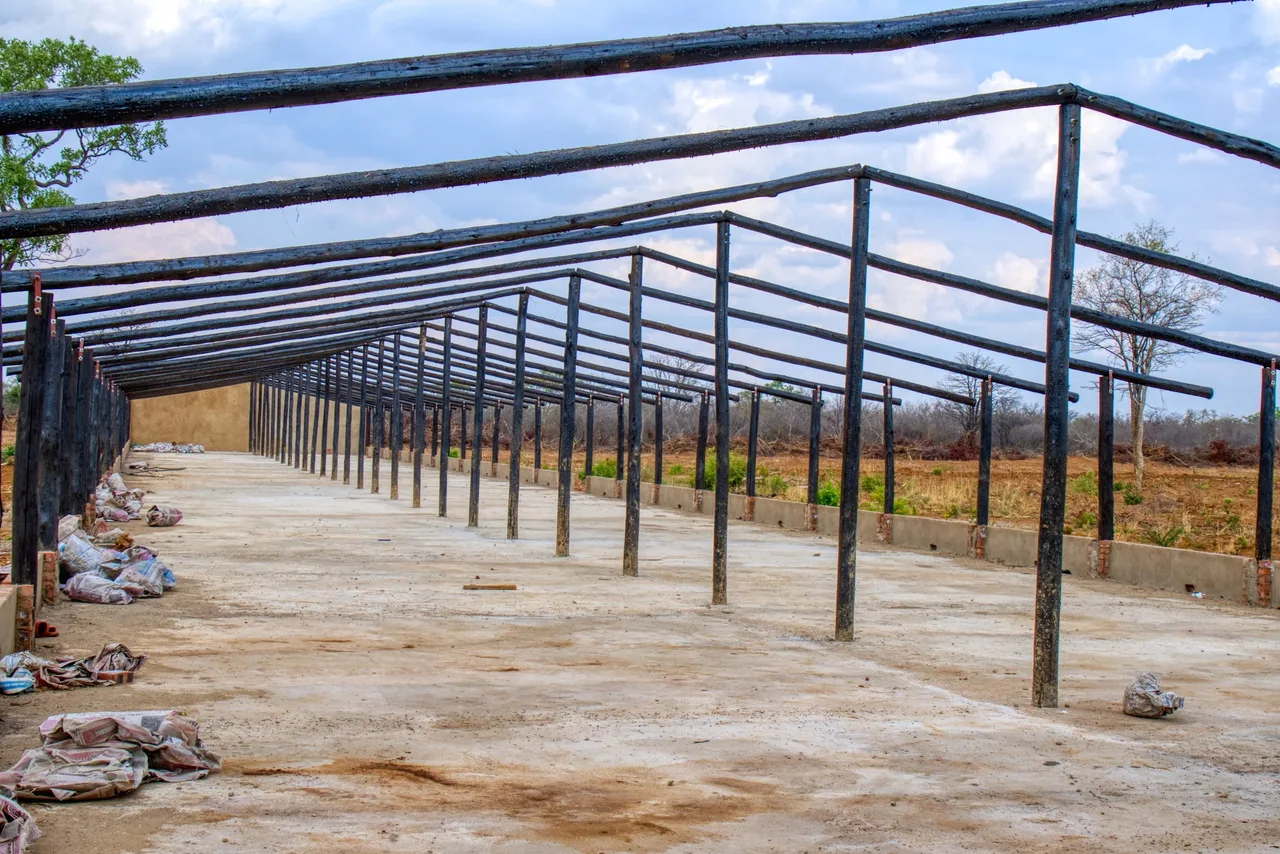
Steel trusses went up over the finished walls, and the long block finally read as a building rather than a foundation plan. On a pig unit the roof does more work than it looks like it does. It sets the shade, it sets how air moves through the pens, and it decides how dry the bedding area stays in a wet week.
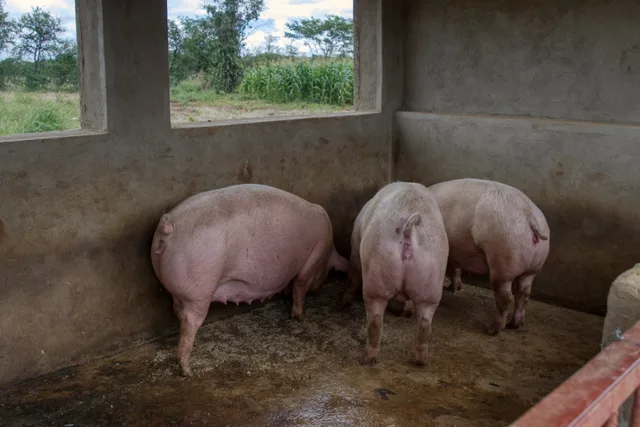
That matters because of something we have posted about more than once: pigs do not sweat the way people do, so they cannot cool themselves down by working harder at it. They rely on shade, on moving air and on a cool surface to lie on. A roof pitched and sheeted properly, with height above the pens and open sides for cross-flow, is the single biggest comfort measure on the whole farm.
No stock went into a new block on the day the roofing finished. Pens were swept, washed and disinfected first, gates and rails were checked over, and the water and feed points were run and tested empty before an animal relied on them. Only then did the herd move.
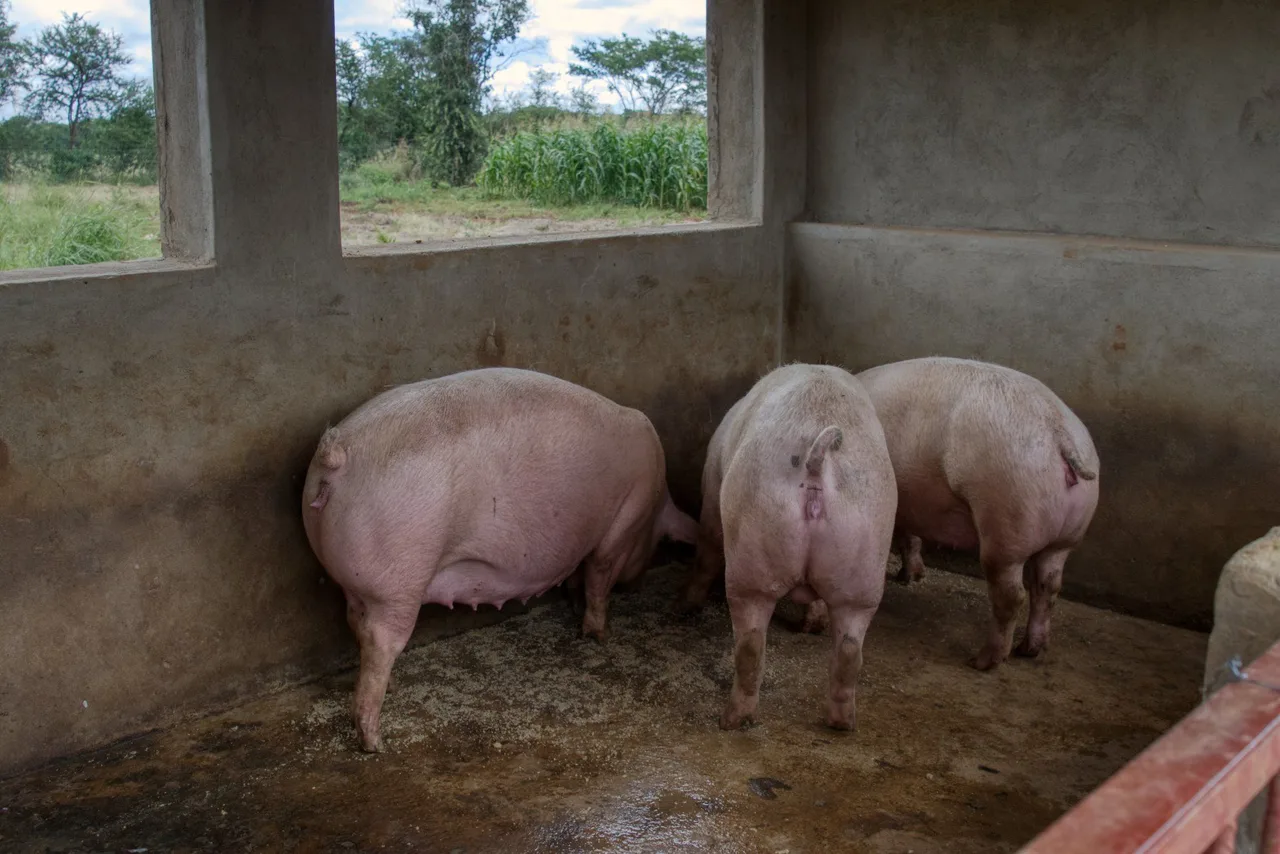
Weaners settle faster than people expect when the pen is right. Within a day the groups had sorted out where they sleep, where they eat and where they mess, which is exactly what you want — it is the sign that the pen is giving them enough room to keep those three things apart. From that point the pens went onto the normal routine: feed twice a day down the line, water checked every day, pens cleaned out, and a written record kept per pen.
The honest answer is that the building work did not change what we do, it changed how well we can do it. Clean, well-designed pens are not a cosmetic thing on a pig farm: they mean healthier pigs, fewer setbacks, and better growth rates on the same feed. That is the whole case for spending months on brick and steel instead of putting up something quick.
Four things are plainly better than they were before:
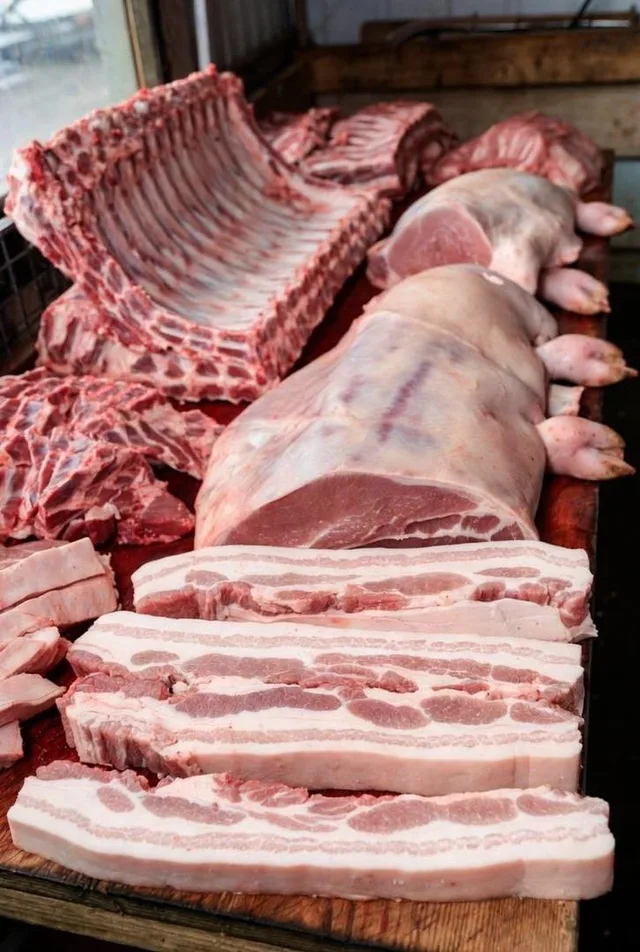
The pork that comes out of these pens is the same pork we sell at the farm gate and through our butchery, and bulk pork is $3.60 per kilogram. The building is not the point of the story. The point is that better housing is the cheapest way we know of to get better stock, and we would rather show you the walls going up than just tell you the pens are good.
Both of these came off our own Facebook farm-fact posts, and both of them are the reason the housing was built the way it was.
Pigs have very few working sweat glands, so they cannot cool themselves the way we do. They need shade, moving air and a cool surface to lie on, especially through the hottest part of a Zimbabwean afternoon. That is why the new blocks were given roof height, open sides and a dry floor to lie on.
A clean, well-designed pen is not a luxury. Good drainage, good airflow and enough space per animal mean healthier pigs, less disease pressure and better growth rates on the same feed. Poor pens cost you quietly, every single batch.
How we run the piggery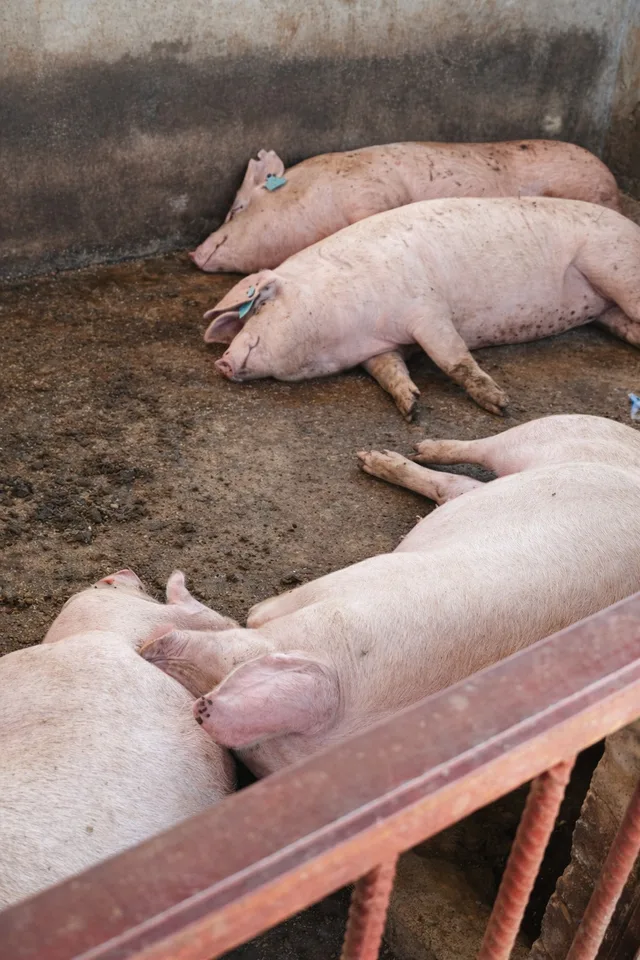

Every claim on this page has a photograph or a video behind it. Here is where the rest of them live.
The progress page walks the same build stage by stage with far more photographs. The gallery has everything else — stock, pens, crops, the team and the buildings. The video page has the reels we filmed on site.
The first reel was filmed on the site in this article, with our farm manager walking the new structures. The second shows the pens now that the stock is in them. Tap either one to play it here.
Every photograph on this page came off our Facebook page, where 19,000 people follow the farm week by week.
The pens are built. These are the three pages that show what comes out of them.
Livestock
Breeding, farrowing, weaners and finishers — how the herd is actually run day to day, plus the poultry alongside it.
 Butchery
Fresh pork, chicken and sausages out of our own butchery. Bulk pork is $3.60 per kg — everything else, call for today's price.
 Progress
Clearing, foundations, brickwork, steel and handover — the full photographic record of how the farm was put up.

Copyright© 2026 Ecomatt Farm. All Rights Reserved.