
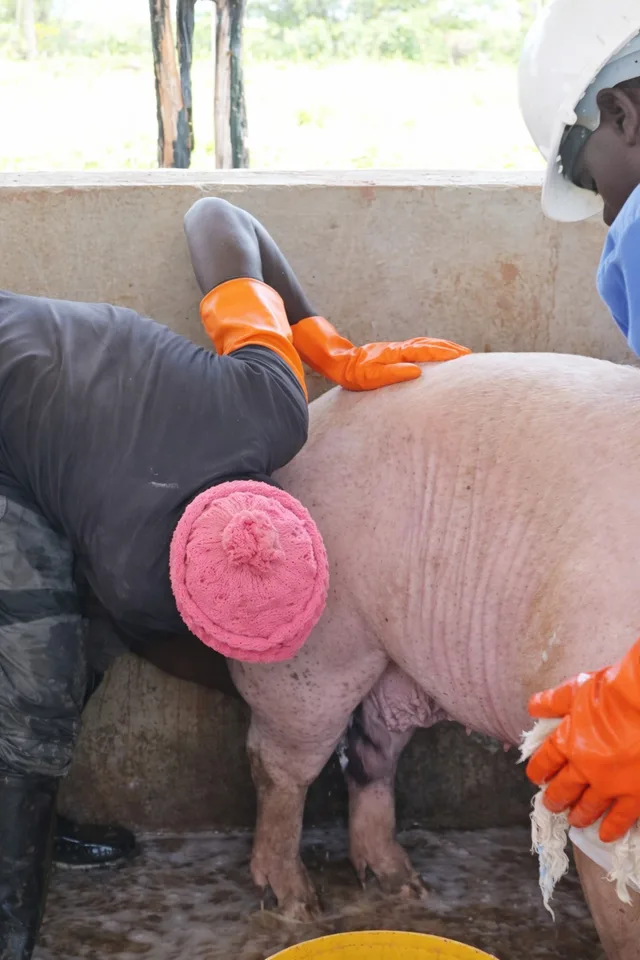
Washing and handling
Sows are washed and handled calmly, and the same people work the house every day. Animals that are used to being handled are easier to check, easier to move and less likely to go off their feed.
The piggery is the heart of Ecomatt Farm — a breeding herd, a farrowing house and pens of weaners, growers and finishers at Plot 12 Sherwood, Kwekwe. Alongside the pigs we run broilers and layers.
Pigs are what Ecomatt is known for. The herd is bred, farrowed, weaned, grown and finished on one site, so we know every animal that leaves the farm and how it was raised.
Pork leaves the farm in bulk at $3.60 per kg. Butchers, caterers, retailers, schools, churches and gatherings order by weight, and we confirm what is ready and when you can collect once you have spoken to the sales line. Single cuts, sausages and smaller packs are handled by the butchery.
Photographs from the piggery at Sherwood. Tap any picture to open it full size — arrow keys or a swipe move you through the set.
Six stages, all on the same site. Each group moves into a pen sized for where it is in its growth, and is fed for that stage rather than one ration for the whole herd.
Everything starts with the sows. They are kept in condition on a breeder ration, checked over every day, given shade and an outdoor run, and moved across to the farrowing house before they are due.
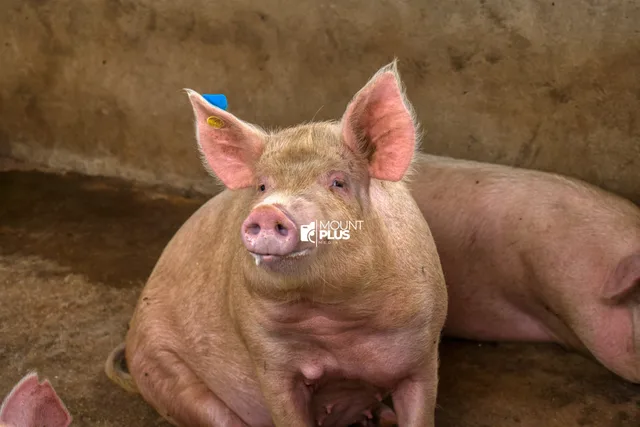

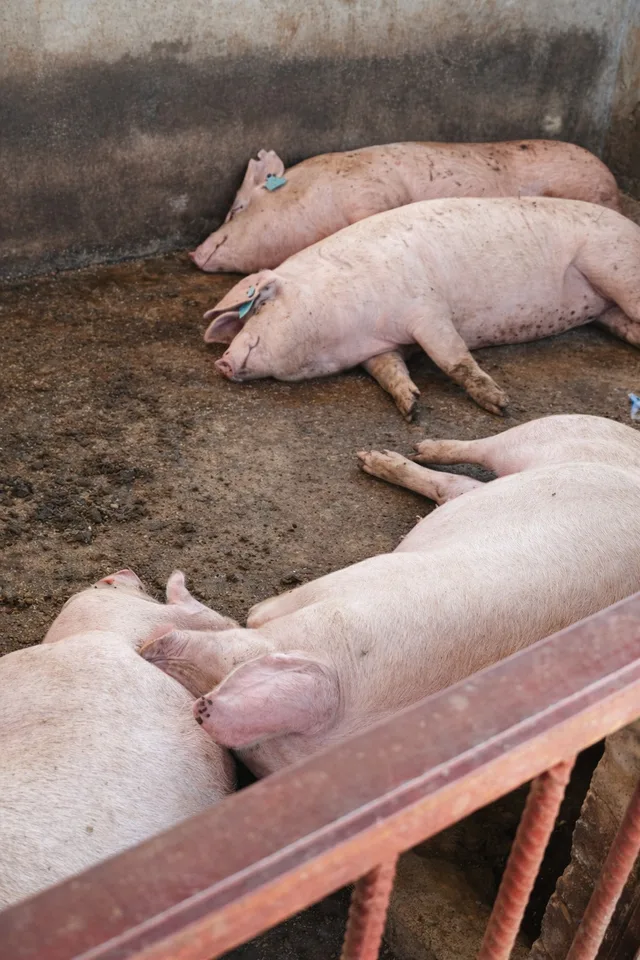
Sows farrow in the farrowing house, where the crate keeps the litter from being lain on and gives the piglets a warm corner of their own. Farrowings are attended and written up, so we know what each sow produced.
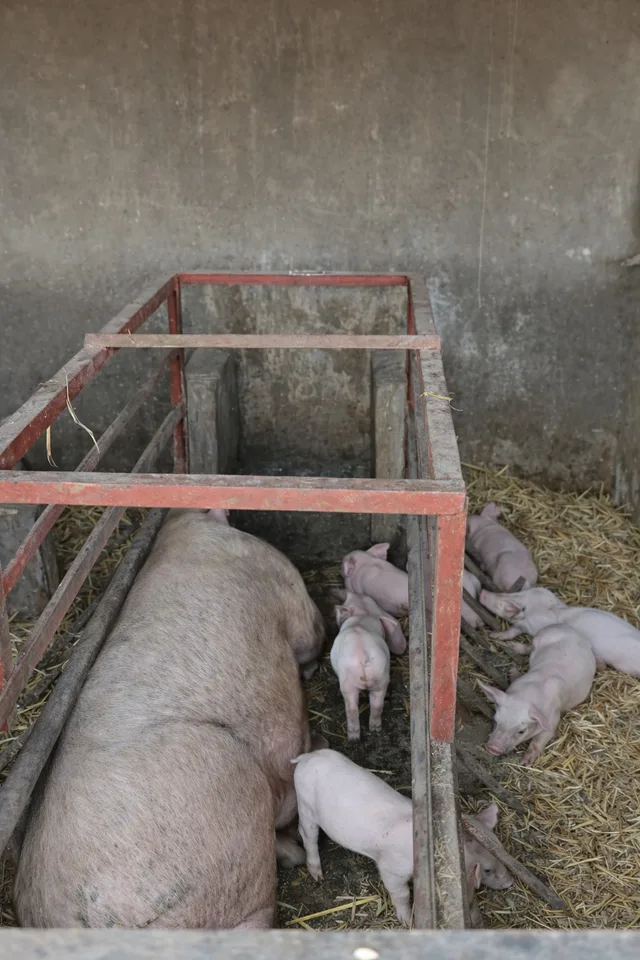
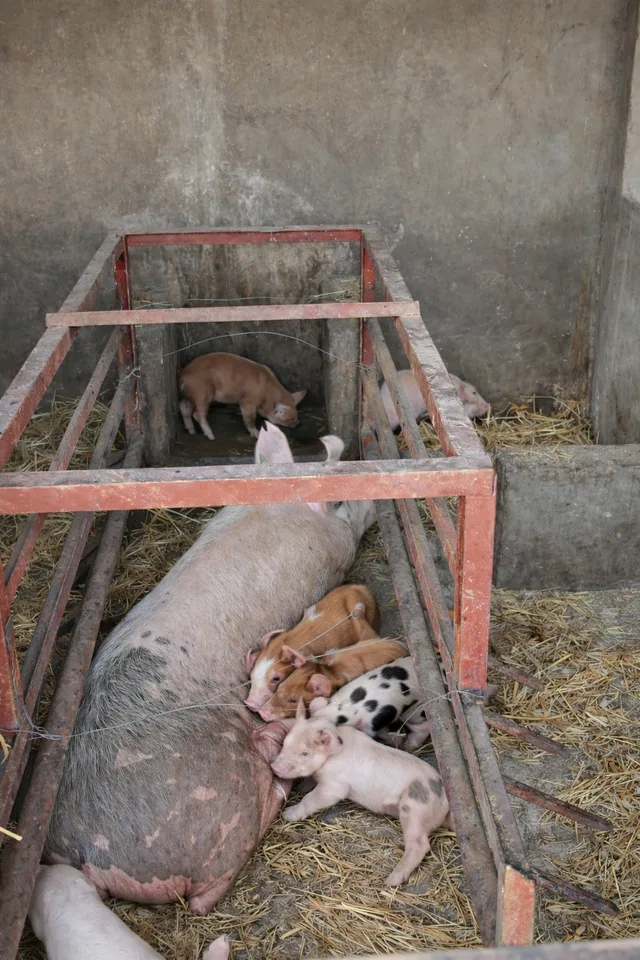
Piglets stay with the sow while they are nursing, then move into the nursery pens with their litter mates. Bedding is kept dry, creep feed is introduced gradually, and the pens are washed down between groups.


Weaning is the stage that decides how the rest of the cycle goes. Weaners go into clean, dry pens in even groups, onto a weaner ration and clean water, and are watched closely for the first days off the sow.
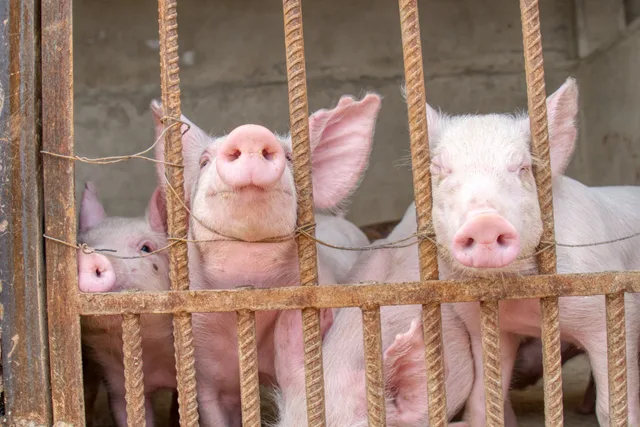


Growers move into the larger, well-ventilated pens on the new block. Airflow, space per pig and a grower ration fed down the line are what keep the group putting on weight evenly.
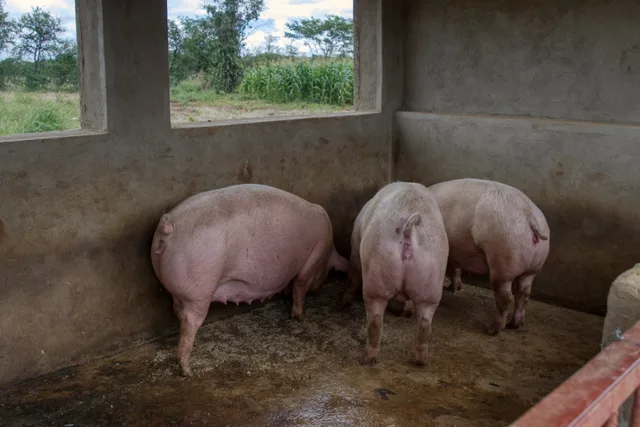

In the finishing pens the herd is fed up to sale weight and checked against the records kept from farrowing onwards. Finished pigs supply our bulk pork orders and the butchery counter.

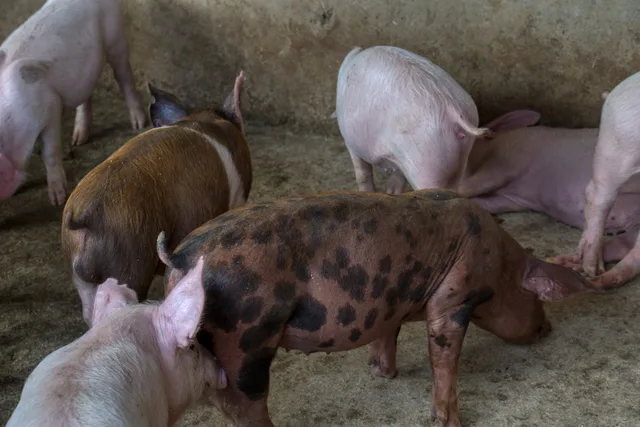
Good pork is mostly housekeeping: dry pens, clean water, the right feed for the stage, and a routine that does not change. This is the daily work behind the herd.
Sows are washed and handled calmly, and the same people work the house every day. Animals that are used to being handled are easier to check, easier to move and less likely to go off their feed.
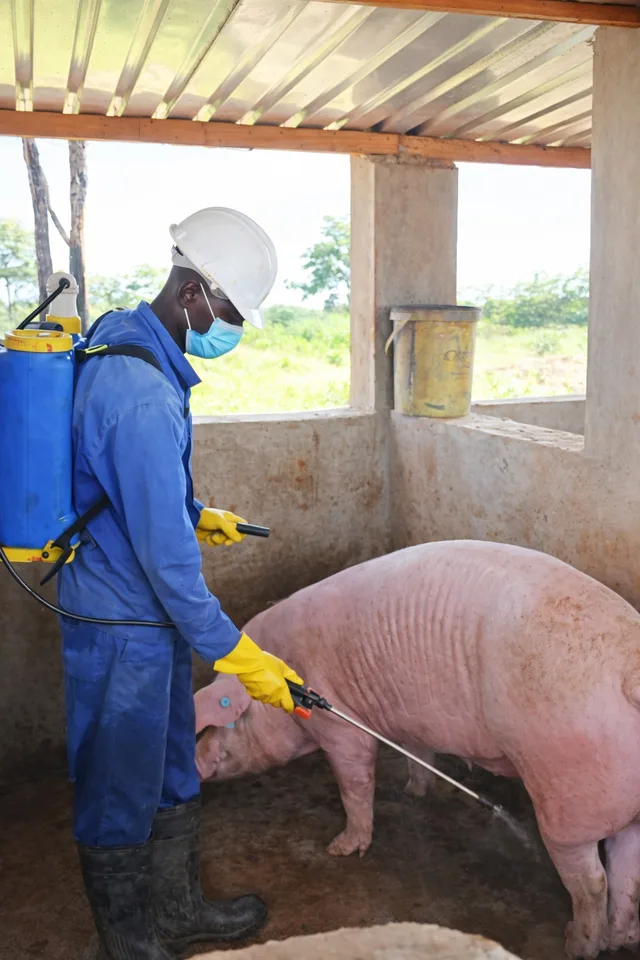
Pens are scraped, washed and disinfected on a routine, and again between groups. Keeping disease out of the housing is far cheaper than treating it once it is in.

Feeding happens at the same times every day, down the feeding line, with the ration matched to the pen — breeder, creep, weaner, grower or finisher. Water troughs are checked at every feed.
We post what happens in the piggery as it happens — the pens, the feeding guide and the reasons behind the routine. Tap a card to read it full size, or a clip to watch.
Alongside the pigs we run poultry — birds for the butchery counter and a laying flock for the eggs we pack on the farm. Batches move through the year, so the sales line always has the freshest answer on what is ready.
Broilers are reared on the farm for the butchery and for customers buying whole birds. Houses are cleaned and disinfected between batches, birds are fed a broiler ration and watered through the day, and the batch is checked morning and evening.
The laying flock is what supplies our eggs. Layers are kept on a layer ration and the houses are collected from through the day, so the eggs come out clean and go straight into trays.
Eggs from our layers are packed on the farm and sold by the tray at the farm gate, through the farm supply store and to shops and vendors who order ahead. Ring the sales line for today's price and what is in stock.
None of the three below is running yet — these are plans, not pens. We would rather tell you what is coming than pretend it is already here. Housing and water come first, and the build is going up now.
Cattle are the next line we intend to add. Grazing, water and handling facilities have to be in place before any animals arrive, so this one follows the construction programme.
Fish production is on the plan for the farm. It needs ponds and a reliable water supply, which is why it sits behind the housing that is going up on site now.
Rabbits are planned as a small-stock line that fits alongside the piggery and poultry. Hutches and a feed plan come first; we will post here and on Facebook when it starts.
Ring the farm, send a WhatsApp or drop us a line and we will tell you what is ready this week. Bulk pork is $3.60 per kg; for everything else we will quote you on the day.
Farrowings, new pens, feeding days and everything in between goes up on our Facebook page first.

Copyright© 2026 Ecomatt Farm. All Rights Reserved.